How to Choose a Mushroom Spawn Supplier: What Commercial Growers Need to Know
Not all spawn suppliers are equal. Here’s what separates reliable producers from the rest.
Your spawn supplier is the single most important partner in your mushroom growing operation. Every block you produce, every harvest you sell, and every customer relationship you build depends on one thing: the quality and reliability of the spawn you start with. Bad spawn doesn’t just mean a few contaminated blocks — it means missed delivery deadlines, disappointed restaurant clients, empty farmers market tables, and revenue that vanishes before you ever had a chance to earn it.
Yet many commercial growers — especially those just entering the industry — treat spawn sourcing as an afterthought. They choose a supplier based on price alone, or simply go with whoever ships fastest. This approach works fine until it doesn’t, and when it fails, the consequences cascade through your entire operation.
This guide is written for commercial mushroom growers who want to make an informed decision about their spawn supply chain. Whether you’re launching your first farm or evaluating whether to switch from your current supplier, these are the criteria that experienced growers use to assess and select spawn partners. We’ll cover quality testing, contamination prevention, genetic vigor, shipping logistics, pricing, technical support, and the practical advantages of working with a domestic Canadian supplier.
None of this is theoretical. These are the questions that real commercial farms ask — and the standards that separate reliable suppliers from risky ones.
Quality Testing and Viability Guarantees

The first question to ask any potential spawn supplier is simple: how do you test your product before it ships? The answer — or the lack of one — tells you nearly everything you need to know about that company’s commitment to quality.
Professional spawn producers maintain viability rates of 98% or higher. This means that at least 98 out of every 100 spawn units shipped will colonize successfully under proper growing conditions. Achieving this standard requires systematic batch testing: sampling from each production run, inoculating test substrates, and verifying colonization rates before the batch is cleared for sale.
Ask your supplier directly: what is your viability guarantee? Can you provide batch-specific test results or lab reports? A supplier who can’t answer these questions clearly — or who seems uncomfortable with the conversation — is a supplier you should approach with caution.
Red flags to watch for include inconsistent results between batches (one order colonizes beautifully, the next barely grows), a lack of documentation or testing records, and vague answers about quality assurance procedures. Consistency is the hallmark of a professional operation. Your production schedule depends on predictable spawn performance — you cannot afford to gamble on every new order.
Best practice for commercial growers: before committing to volume orders with any new supplier, request a sample batch. Inoculate a small number of blocks under your standard conditions and evaluate colonization speed, contamination rate, and fruiting performance. This small upfront investment can save you thousands of dollars and weeks of lost production.
Contamination Prevention
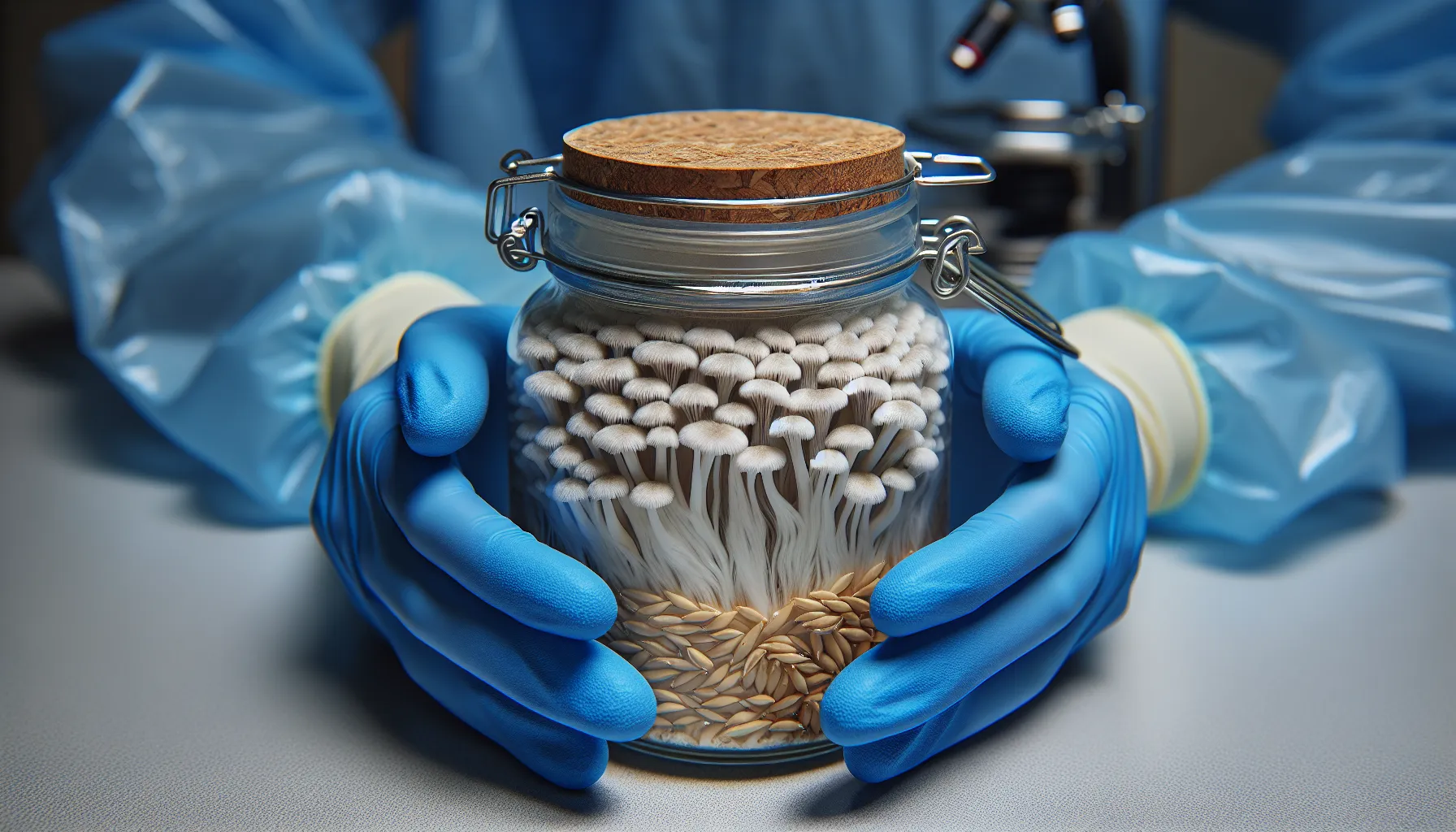
Contamination is the silent killer of mushroom farming profitability. A contamination rate of even 5% can wipe out the margins on an entire production cycle — and when the contamination comes from your spawn rather than your own facility, it’s both devastating and preventable.
Understanding how spawn is produced helps you evaluate a supplier’s contamination risk. Professional spawn production requires rigorous sterile technique at every stage: grain preparation, sterilization, inoculation, and incubation. The inoculation step is particularly critical — this is where sterilized grain meets live mushroom culture, and any contaminant introduced at this point will proliferate throughout the entire batch.
Quality suppliers produce spawn in cleanroom environments using laminar flow hoods or biological safety cabinets that filter incoming air to remove contaminant spores. They validate their sterilization cycles with biological indicators, maintain strict protocols for personnel hygiene and gowning, and monitor their facility air quality regularly.
When evaluating a supplier, ask about their contamination rate — what percentage of their production batches test positive for contamination before shipping? Rates below 1% indicate a well-run lab. Rates above 3% suggest systemic issues that will eventually become your problem. Also ask about their sterilization validation procedures and aseptic transfer protocols.
The hidden cost of contaminated spawn extends far beyond the price of the spawn itself. Each contaminated block represents lost substrate materials, lost labour for inoculation, lost incubation space and time, and — most critically — lost revenue from the mushrooms you won’t harvest. A single batch of bad spawn can cost a commercial operation thousands of dollars in cascading losses. This is why contamination prevention at the supplier level is not a nice-to-have — it’s a fundamental requirement.
Strain Age and Genetic Vigor
Not all spawn is created equal, even when it’s the same species. The genetic vigor of your spawn — how vigorously it colonizes, how prolifically it fruits, and how resistant it is to contamination — depends heavily on the age of the culture and the number of generations it has been transferred through.
Every time a mushroom culture is transferred from one plate or grain jar to another, it undergoes a process called subculturing. Each subculture represents one generation. With each successive generation, there is a risk of genetic drift, reduced vigor, and increased susceptibility to contamination. Cultures that have been subcultured dozens of times — as happens when suppliers maintain the same master culture for years — can produce spawn that colonizes slowly, fruits poorly, and contaminates more easily.
The best suppliers maintain their genetics carefully: working from verified original isolations, limiting the number of transfers, and periodically refreshing their culture library with new isolations. Ask your supplier how many generations removed their production spawn is from the original isolation. Lower numbers (typically under 10) indicate fresher, more vigorous genetics.
Freshly produced spawn also outperforms spawn that has been sitting in inventory. Spawn is a living organism — grain spawn that has been stored for weeks or months loses viability and vigor. Suppliers who produce spawn to order, rather than maintaining large standing inventories, generally deliver a superior product. Ask about production lead times: a supplier who ships within days of your order is likely producing fresh, while one who ships immediately from inventory may be sending older spawn.
Shipping and Logistics
Spawn is alive. From the moment it leaves the supplier’s facility to the moment it arrives at your farm, it needs appropriate conditions to remain viable. Temperature extremes — both heat and cold — can damage or kill spawn, and rough handling can break up colonized grain in ways that slow recovery and increase contamination risk.
When evaluating a supplier’s shipping practices, ask about temperature control measures. Do they use insulated packaging? Do they include temperature indicators or data loggers for high-value shipments? Do they adjust their shipping schedule based on weather forecasts to avoid transit during extreme heat or cold? These details matter, especially in a country like Canada where winter temperatures can easily drop below -20°C and summer heat waves can push trailer temperatures above 40°C.
For Canadian growers specifically, the question of domestic versus international sourcing carries significant practical implications. Cross-border shipments from the United States face CFIA (Canadian Food Inspection Agency) inspections that can add days to transit time — days during which your spawn sits in an uncontrolled warehouse environment. Currency conversion adds cost unpredictability, and customs delays can disrupt your carefully planned inoculation schedule.
Domestic Canadian suppliers eliminate these risks entirely. Shipping within Canada means faster delivery times (typically 1–3 business days to most regions), no customs inspections or border delays, no currency conversion, and the ability to coordinate shipping schedules directly with your production calendar. When your spawn arrives a day late because of a customs hold, that’s a day your inoculation crew sits idle — a cost that doesn’t show up on the spawn invoice but hits your bottom line just the same.
Pricing Transparency
Spawn pricing should be straightforward, predictable, and transparent. As a commercial grower, you need to plan your input costs months in advance — fluctuating or opaque spawn pricing makes accurate budgeting impossible and erodes trust in the supplier relationship.
Look for suppliers who offer clear tiered volume pricing: defined price breaks at specific order quantities, published on their website or in a formal price sheet. You should be able to calculate your spawn cost per block without needing to negotiate or request a custom quote for every order. Tiered pricing rewards your growth — as your operation scales and your order volumes increase, your per-unit spawn cost should decrease proportionally.
Unexplained price changes are one of the most common reasons commercial growers switch suppliers. Research suggests that as many as 68% of growers who change spawn suppliers cite pricing issues — not necessarily high prices, but unpredictable prices — as a primary factor. If your supplier raises prices without advance notice or clear justification, that’s a relationship red flag.
Equally important are clear lead times and a straightforward ordering process. You should know exactly how far in advance you need to order, when your spawn will ship, and when it will arrive. Surprises in any of these areas disrupt your production schedule. The best suppliers provide order confirmations with expected ship dates and tracking information — basic logistics professionalism that too many small spawn producers neglect.
Technical Support
Growing mushrooms commercially involves an enormous number of variables: substrate formulation, sterilization parameters, inoculation rates, incubation conditions, fruiting environment, harvest timing, and post-harvest handling. Even experienced growers encounter new challenges as they scale up, add new species, or adapt to seasonal changes.
A spawn supplier who offers genuine technical support adds value far beyond the spawn itself. Ask whether the supplier has trained mycologists on staff — people who understand the biology of the organisms they’re selling and can troubleshoot growing issues based on real production experience. There’s a significant difference between a supplier who can say “our spawn is fine, the problem must be on your end” and one who can work through your contamination issue, review your environmental data, and help you identify the root cause.
Species-specific expertise matters especially. If you’re growing king oyster, you need a supplier who understands the CO2 management requirements for proper stem development. If you’re running shiitake on supplemented sawdust blocks, you need a supplier who can advise on browning protocols and cold-shocking schedules. Generic advice isn’t enough — you need a partner who understands the specific demands of the species and substrates you’re working with.
The value of good technical support is difficult to quantify but impossible to ignore. A single conversation that helps you solve a persistent contamination issue or optimize your fruiting parameters can save thousands of dollars in lost production. When evaluating suppliers, ask about the support they offer: is it email only, or can you get someone on the phone? Is support included with your spawn purchase, or is it an additional charge? And critically — have they actually grown the species they’re selling at commercial scale, or are they purely a laboratory operation?
Track Record and References
A supplier’s history tells you what their future performance is likely to look like. How long have they been in business? What is their annual production volume? How many commercial farms do they supply? These questions help you gauge both reliability and scale — a supplier who has been operating for several years and serves dozens of commercial clients has a proven track record that a new entrant simply cannot match.
Don’t hesitate to ask for references. A confident supplier will happily connect you with existing commercial customers who can speak to their experience — spawn quality, consistency, shipping reliability, and responsiveness when issues arise. If a supplier is reluctant to provide references, that reluctance itself is informative.
Look for suppliers who are transparent about their production capabilities and limitations. A supplier who honestly tells you “we can’t fill that volume on that timeline” is far more valuable than one who overpromises and underdelivers. Reliability matters more than ambition when your production schedule depends on their performance.
The Canadian Advantage: Why Domestic Spawn Matters
This section is not a sales pitch — it’s a practical logistics reality that every Canadian commercial grower should factor into their supplier decision.
Canadian mushroom growers who source spawn from Canadian suppliers benefit from several tangible advantages that have nothing to do with brand loyalty or nationalism. They’re purely practical considerations that affect your operation’s efficiency and reliability.
First, domestic shipping eliminates border risk entirely. No CFIA inspections, no customs holds, no phytosanitary certificate requirements, no broker fees. Your spawn ships Monday, it arrives Wednesday. That predictability is worth more than any small per-unit price difference from a foreign supplier.
Second, Canadian suppliers understand the Canadian growing environment. They know what it means to fruit mushrooms when it’s -15°C outside and your heating system is working overtime. They understand the humidity challenges of Canadian winters, the ventilation considerations of our building codes, and the market dynamics of Canadian retail and foodservice channels. This contextual knowledge makes their technical support more relevant and actionable.
Third, there are no currency conversion surprises. When the Canadian dollar fluctuates against the US dollar — as it regularly does — growers who source from American suppliers see their input costs change unpredictably. Domestic sourcing in Canadian dollars means your spawn cost is your spawn cost, period.
Finally, working with a Canadian supplier supports the development of Canada’s domestic mushroom industry infrastructure. As more Canadian growers source from Canadian producers, the entire supply chain strengthens — more investment in Canadian genetics research, more innovation in production techniques suited to our climate, and a more resilient industry that isn’t dependent on cross-border supply chains.
Choosing a Partner, Not Just a Supplier
The spawn supplier you choose is not just a vendor — they’re a partner in your operation’s success. The quality of their product sets the ceiling on what you can achieve. The reliability of their logistics determines whether you can meet your own commitments. And the depth of their technical support can be the difference between solving a problem in days versus struggling with it for weeks.
Take the time to evaluate potential suppliers against every criterion in this guide. Request samples, ask hard questions, check references, and make your decision based on total value rather than unit price alone. The cheapest spawn is almost never the most profitable spawn — not when you factor in contamination losses, inconsistent performance, and the opportunity cost of suboptimal yields.
At Boreal Genetics, we’ve built our Commercial Spawn Program around every standard described in this guide — because we wrote this guide based on what we believe commercial growers deserve from their spawn supplier. Lab-tested viability guarantees, rigorous contamination prevention, fresh genetics produced to order, reliable domestic shipping, transparent pricing, and mycologist-led technical support.
If you’re evaluating spawn suppliers for your commercial operation, we’d welcome the chance to show you how we measure up. Learn more about our commercial program, or reach out to discuss your specific growing needs.